Thursday, May 9, 2019

קטניות בפסח

חתני שלח לי את הלינק הזה למאמר של הרב אורן דובדבני בנושא של קטניות בפסח. זה מה שכתבתי לו בתגובה:

קראתי את מאמרו של הרב דובדבני,
https://www.ynet.co.il/articles/0,7340,L-5499152,00.html, ששלחת לי בחול מועד. בגדול, הוא צודק. יש פרטים שאני חולק עליו בהם, כדהלן...

"למנהגים יש מסלול משלהם - ברגע שמנהג התחיל,  אי אפשר להתיר אותו."

זה מחלוקת ראשונים, מבוסס על סיפור במסכת פסחים דף נ' עמוד ב'. זה תרגומו של הרב שטיינזלץ:

בני בית שאן היו נוהגים שלא היו הולכים מצור לצידון בערב שבת. באו בניהם לפני רבי יוחנן ואמרו לו: אבותינו אפשר היה להם; אנחנו אי אפשר לנו. אמר להם: כבר קיבלו אבותיכם עליהם, שנאמר: "שמע בני מוסר אביך ואל תטש תורת אמך" (משלי פרק א' פסוק ח').

ב"עין משפט - נר מצוה" על העמוד, יש מראה מקום ל"טור שלחן ערוך" אבל לא לרמב"ם. זה סימן שהרמב"ם אינו פוסק כרבי יוחנן שאסור לבטל מנהג אבות, אלא הוא פוסק שבדרך כלל מוטר לבטל מנהג אבות. ה"שלחן ערוך" פוסק כרבי יוחנן שאסור לבטל מנהג אבות. למרות שהרב יוסף קארו ("המחבר") פוסק ככה, הוא מצטט בספרו "בית יוסף" ראשונים אחרים שמתירים ביטול מנהג אבות על ידי הטרת נדרים.

הרב דובדבני מצטט את המנהג לשמור יום טוב שני בחו"ל כדוגמה לעיקרון שאסור לבטל מנהג. לפי הרמב"ם, המנהג הזה הוא אחד מן היוצאים מן הכלל ואי אפשר להסיק ממנו שאסור לבטל שום מנהג. זה לשון הרמב"ם, בהלכות קידוש החודש, פרק ה' הלכה ה':

"בזמן הזה שאין שם סנהדרין ובית דין של ארץ ישראל קובעין על חשבון זה. היה מן הדין שיהיו בכל המקומות עושין יום טוב אחד בלבד אפילו המקומות הרחוקות שבחוצה לארץ כמו בני ארץ ישראל. שהכל על חשבון אחד סומכין וקובעין. אבל תקנת חכמים הוא שיזהרו במנהג אבותיהם שבידיהם."

כלומר, יום טוב שני של גלויות איננו סתם מנהג, אלא תקנת חכמים.

אף על פי שאני שומר מנהג איסור קטניות בפסח (יש דברים הרבה יותר חשובים שצריכים תיקון, וזה רק שבוע אחד בלי קטניות), אני מלמד זכות על האשכנזים שביטלו את המנהג. במחלוקת בהלכה דרבנן הולכים לקולא, והרמב"ם הוא דעת יחיד חשוב,

נחזור לדברי הרב דובדבן.

"...יהודי מזרח אירופה...הרחיבו את ההוראה שלא לאכול קטניות לבוטנים, למשל, שהם בוודאות לא קטניות."

נכון! אין שום טעם לכלול באיסור קטניות צמחים שיהודי אשכנז לא הכירו בזמן שהם אימצו את המנהג. הצמחים שאין לכלול באיסור כוללים לא רק בוטנים, אלא גם, למשל, סויה. חוץ מזה, אין לאסור נוזלים שמפיקים מקטניות. בעיקרון יש להטיר גם תירס, אלא שתירס הוא סוג של דגן ולכן זה סביר לאסור קמח תירס, אבל לא לאסור קלחי תירס.

בסוף דבריו: "שכל אחד ישאל את רבותיו." זה סימן שהוא רב אורתודוקסי. אני הייתי כותב "שכל אחד יתייעץ עם רבותיו".

Tuesday, April 16, 2019

All Jews are Mamzerim IV

In case your Hebrew isn't good enough to read Part I, this video presents pretty much the same mathematical argument. The video is directed towards proving that everyone is a descendant of royalty because everyone has a king somewhere in his or her family tree. The same logic shows that all Jews are mamzerim because every Jew has a mamzer or a mamzeret somewhere in his or her family tree. To show that all Europeans descend from royalty, you just have to establish that there was a king in Europe 1200 years ago. There was. Charlemagne. And to show that all Jews are mamzerim, you just have to establish that there were mamzerim among the Jews of 2400 years ago. And there were, according to the first mishnah of the fourth chapter of Kiddushin. And don't try to use this frame of the video:
to claim that all the mamzerim and mamzerot are over on the left. There is no reason to expect the mamzerim and the mamzerot to not be distributed uniformly across the whole population.

Added 7/5/19: This Numberphile video makes the same point.

Sunday, April 7, 2019

Approproate Names for Physicians

I used to have a urologist named "Wiener". It occurred to me this morning that "Krebs" is a good name for an oncologist and "Seymour" is a good name for a radiologist. Any others?

Tuesday, March 12, 2019

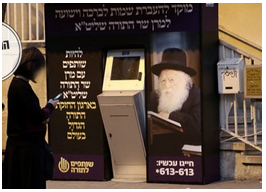
This picture illustrates that Harediism is idolatrous

This picture appeared in last Shabbat's Makor Rishon. It illustrates the fact that the Haredim worship human idols. Petitioning God this way at the Kotel is a form of prayer (just based on the false premise that prayer works better at the Kotel). Petitioning "Rav" Kanievsky this way is heresy.

התמונה הזאת הופיעה במקור ראשון בשבת שעבר. היא מדגימה את העובדה שהחרדים הם עובדי אלילים שהם בני אדם. הגשת בקשות לברכות מן הקב"ה אצל הכותל באופן הזה היא סיג של תפילה (רק מבוסס על ההנחה הלא-נכונה שתפילה אצל הכותל משפיע יותר). הגשת בקשות לברכות מ"רב" קוניבסקי באופן הזה היא כפירה.

(Added 20/2/20) Additional proof of the divinity of "Rav" Kanievsky in the eyes of the Haredim

(Added 18/3/20) ארגון "קופת העיר" מנצל את האמונה הטפלה ב"רב" קניבסקי

(Added 6/4/20)
The following is part of an article by Yehuda Yifrah, in the Yoman supplement of the 3/4/20 edition of Makor Rishon, complaining about "the enlightened pogrom" (that's the title, "הפוגרום הנאור") against the Haredim in reaction to their inadequate response to the corona virus pandemic:
נכון, התמונה מורכבת. הביקורת שהמגזר החרדי סופג איננה נטולת בסיס. ימי המגפה חושפים אינספור כשלים תשתיתיים בהנהלות הציבור הזה, והבעיה מתחילה מהראש. לא יכלה להיות המחשה טובה יותר מהסרטון שבו נראה מרן הרב חיים קנייבסקי חותם על פסק ההלכה השני, שבו הוא חוזר בו מההחלטה הקודמת להמשיך להפעיל את התורה והישיבות.
מדובר ביהודי כבד שמיעה בן 92, והמחזה היה מכמיר לב. על הסטנדר שלו הונחו ארבע שאלות סגורות, מנוסחות במדויק כדי להסיג מטרה ספיציפית, והתשובות עליהן הן "כן לא מותר אסור". כבוד הרב מנותק לחלוטין מהעולם, תלוי במידע סלקטיבי שמזרימים לו עסקנים בעלי מארג אינטרסים סבוך, ופסקי ההלכה שלו - נעדרים הנמקה לחלוטין. אפשר רק לדמיין מה היה קורה לו בג"ץ היה מפרסם פסק כזה.
It reminds me of what we will read in Hallel three days hence:
ד עֲ‍צַבֵּיהֶם כֶּסֶף וְזָהָב מַעֲשֵׂה יְדֵי אָדָם. ה פֶּה לָהֶם וְלֹא יְדַבֵּרוּ עֵינַיִם לָהֶם וְלֹא יִרְאוּ. ו אָזְנַיִם לָהֶם וְלֹא יִשְׁמָעוּ אַף לָהֶם וְלֹא יְרִיחוּן. ז יְדֵיהֶם וְלֹא יְמִישׁוּן רַגְלֵיהֶם וְלֹא יְהַלֵּכוּ לֹא יֶהְגּוּ בִּגְרוֹנָם. ח כְּמוֹהֶם יִהְיוּ עֹשֵׂיהֶם כֹּל אֲשֶׁר בֹּטֵחַ בָּהֶם.

Tuesday, March 5, 2019

Yaakov Yosef of Polonnoye - Postscript

The author of the Encyclopedia Judaica article is Moshe Halamish. I googled him to try to find on-line something else he has published, in order to gauge his attitude towards Hassidut. I found this article about Shneur Zalman of Liadi. I see no indication there that Prof. Halamish is hostile to Hassidut. So maybe his Encyclopedia Judaica article really is an accurate description of Yaakov Yosef's doctrine of the zaddik. That implies that Yaakov Yosef, and by implication also the Ba'al Shem Tov, thought that the cult of the zaddik is a good thing, or at least a necessary evil for confronting the crisis in 18th century Eastern European Judaism. I will be דן לכף זכות and posit that they didn't realize how easy it is for a charismatic psychopath like Eliezer Berland to pass himself off as a zaddik.

Monday, March 4, 2019

Yaakov Yosef of Polonnoye - Maybe a Smoking Knife?

Here is the last paragraph of the Encyclopedia Judaica article about Jacob Joseph Ben Zevi Hakohen Katz of Polonnoye:
The "man of matter" must also support the zaddik financially to enable him to fulfill his duty successfully and devote himself to God through Torah study and prayer. Jacob Joseph taught the importance of the communal Sabbath "third meal" for the hassidic congregation, saying that he who does not participate in it with his brethren "makes the Sabbath profane" (Toledot Ya'akov Yosef, beginning of the section on Noah). Jacob Joseph's hostility to the ordinary type of rabbi is expressed in his denunciation of them as "Jewish demons, the equivalent of the Satan and the evil inclination itself, the whole of their Torah studies being for their personal aggrandizement."
So here is a comparison of Yaakov Yosef's (alleged) doctrine with some checklist items, for telling whether a religious movement is a cult, from this Web page, "Checklist of Cult Characteristics", of cult recovery 101:

Checklist:
The group is focused on a living leader to whom members seem to display excessively zealous, unquestioning commitment.
zaddik:
The zaddik is likened to the head or eyes of the body, and the multitude to the feet. The congregation is thus conceived as a living organism, the zaddik being the life and soul of his generation.
 Checklist:
The group is preoccupied with making money.
zaddik:
 The "man of matter" must also support the zaddik financially to enable him to fulfill his duty successfully and devote himself to God through Torah study and prayer.
Checklist:
Questioning, doubt, and dissent are discouraged or even punished.
zaddik:
He is enjoined to believe in the zaddik with absolute faith, without any afterthoughts or doubts as to the zaddik's way of life, because all his actions are performed for the sake of Heaven.
Checklist:
The leadership dictates sometimes in great detail how members should think, act, and feel (for example: members must get permission from leaders to date, change jobs, get married; leaders may prescribe what types of clothes to wear, where to live, how to discipline children, and so forth).
zaddik:
None of the members can adhere truly to God, so long as only one, even if an ignoramus, is non conscious of his need to be uplifted through the head (the zaddik). Hence it is the duty of the zaddik to exeert his influence over him.
Checklist:
The group has a polarized us-versus-them mentality, which causes conflict with the wider society.
zaddik:
 Jacob Joseph's hostility to the ordinary type of rabbi is expressed in his denunciation of them as "Jewish demons, the equivalent of the Satan and the evil inclination itself, the whole of their Torah studies being for their personal aggrandizement."
Checklist:
The group’s leader is not accountable to any authorities (as are, for example, military commanders and ministers, priests, monks, and rabbis of mainstream denominations).
The group teaches or implies that its supposedly exalted ends justify means that members would have considered unethical before joining the group (for example: collecting money for bogus charities).
zaddik:
Moreover, for the sake of this unification with the multitude, and so as to be able to uplift it, the zaddik may sometimes have to descend from his own level and to sin for the good of his task.
Checklist:
The leadership induces guilt feelings in members in order to control them.
Members’ subservience to the group causes them to cut ties with family and friends, and to give up personal goals and activities that were of interest before joining the group.
Members are encouraged or required to live and/or socialize only with other group members.
zaddik:
 Jacob Joseph taught the importance of the communal Sabbath "third meal" for the hassidic congregation, saying that he who does not participate in it with his brethren "makes the Sabbath profane"
 Hassidut, as defined by Yaakov Yosef according to the Encyclopedia Judaica article, sure looks like a cult!, It quacks like a cult, it has webbed feet like a cult, and it lays eggs like a cult.

OTOH the Encyclopedia Judaica article is a (probably biased) tertiary source, which is why I was doing quick and dirty keyword searches in בן פורת יוסף and תולדות יעקב יוסף - בראשית שמות ויקרא: I want to know whether Yaakov Yosef really thought that way about the relationship between the zaddik and his followers.

The bibliography of the Encyclopedia Judaica article includes The zaddik: the doctrine of the zaddik according to the writings of Rabbi Yaakov Yosef of Polnoy, by Samuel H. Dresner. I perused that book at the Hebrew Union College library in Jerusalem. As I expected, it is a secondary source with lots of quotes from Yaakov Yosef's writings. Unlike the Encyclopedia Judaica article, that book is biased in favor of Hassidut. It presents the zaddik as the Baal Shem Tov's proposed solution to the problem of the sterility of Jewish religious life in 18th century Eastern Europe. The book describes the character and mission of the zaddik, including how the zaddik is supposed to relate to ordinary Jews (and BTW the "sins" that the zaddik commits in pursuit of his mission are limited to trivial matters like skipping Minha in order to help a fellow Jew), but says nothing about how ordinary Jews are supposed to relate to the zaddik, so it is not useful in determining whether the Encyclopedia Judaica's cult-like description of Hassidut as envisioned by Yaakov Yosef is accurate. I need to look at other sources in the bibliography.

Sunday, March 3, 2019

Yaakov Yosef of Polonnoye - No Smoking Gun

Yesterday I was at this sheur. The only חסידות that Menahem Lorberbaum spoke about was that of Yaakov Yosef of Polonoyye, one of the students of the Baal Shem Tov. When I got home I looked him (Yaakov Yosef, not Menahem) in Encyclopedia Judaica (first edition), where he is called "Jacob Joseph Ben Zevi Ha-Kohen Katz of Polonnoye".

Here is the next to last paragraph:
The same relationship within man also exists within society. There is the "multitude" and the "scholar". The man of merit and form is the zaddik, while the "multitude" is matter. The zaddik is likened to the head or the eyes of the body, and the multitude to the feet. The cngregation is thus conceived as a living organism, the zaddik being its life and soul in his generation/ This organismic premise precludes the concept that only a few are elect. It follows that the interrelationship in this corporate body causes any failure on the part of even the lowest member - whether in matter or in spirit - to be reflected far more damagingly in the state of "the head" - the zaddik. None of the members can adhere truly to God, so long as only one, even if an ignoramus, is not conscious of his need to be uplifted through the head (the zaddik). Hence it is the duty of the zaddik to exert his influence over him. Moreover, for the sake of this unification with the multitude, and so as to be able to uplift it, a zaddik may sometimes have to descend from his own level and to sin for the good of his task. This concept of the "descent of the zaddik" holds an important place in Jacob Joseph's teachings. The Jew of the multitude is incapable "of studying the Torah, and as this is through no neglect of his own, God will not punish him" if he adheres to the zaddik". He is enjoined to believe in the zaddik with absolute faith, without any afterthoughts or doubts as to the zaddik's way of life, because all of his actions are performed for the sake of Heaven.
That last sentence suggested to me that I might find in the writings of Yaakov Yosef a smoking gun to support my thesis that Hassidut is idolatrous, and more, that it was idolatrous from the very beginning. Some quick keyword searches in בן פורת יוסף and   תולדות יעקב יוסף - בראשית שמות ויקרא
came up dry. If I want to get serious about this I will have to look at the article's bibliography, but right now that paragraph looks like just ordinary egomaniacal moral corruption, not actual self-deification.