What I am about to describe AFAIK never happened, but AFAIK is consistent with everything that is known to have happened. It may be useful as an antidote to the much more dangerous conspiracy theory of the International Jewish Conspiracy. Specifically, if you tell it to a believer in the International Jewish Conspiracy, to show him/her where the Protocols of the Elders of Zion really came from, s/he may consider my conspiracy theory to be more plausible and thus stop blaming *everything* on the Jews.
At the end of the Napoleonic Wars, the leaders of Great Britain, notably the Duke of Wellington, decided that in order to keep Great Britain safe from a future threat of invasion from the Continent, Great Britain needed to rule the world. They figured that Great Britain itself was only strong enough to control the Eastern Hemisphere outside Europe, based on the continuing British success in expanding the zone of British rule in India, so they needed allies. The obvious ally to control the Western Hemisphere was the up and coming republic in North America, the United States of America, that shared a common culture with Great Britain and in any case had its own interest in keeping European powers, particularly Spain, from taking over the former colonies to its south that had taken advantage of the Napoleonic Wars to turn themselves into independent countries. To control Europe, they decided that the best allies would be the Jews generally and the Rothchilds specifically. They were impressed with how the Rothchilds had succeeded in cornering the Belgian stock market after the Battle of Waterloo. Furthermore, the Jews were the only European ethnic group that didn't have a specific territorial base in Europe and so were plausibly capable of ruling Europe generally and not motivated to betray their British allies.
The first part of the plot fell into place when President James Monroe of the United Staters of America announced the Monroe Doctrine. Everyone knew that the USA was not strong enough to enforce the Monroe Doctrine all by itself and that the real muscle behind the Monroe Doctrine was the Royal Navy. The second part of the plot was supposed to be the revolutions of 1848, but to the chagrin of the British and the Rothchilds those revolutions were suppressed.
The Rothchilds returned to their primary interest of making money, until the rise of modern European anti-Semitism towards the end of the nineteenth century. What really scared the Rothchilds was the Dreyfus Affair, that showed that even the Rothchilds' base in the liberal democratic French republic was vulnerable. They decided that they needed a long term backup plan just in case they would eventually need to leave France. They dusted off their old plans for ruling Europe and modified them to fit the current contingency. Turkish Palestine looked like a good choice for a replacement base outside Europe because it was inevitable that the great powers of Europe would eventually divide up the Ottoman Empire among themselves and Palestine had a historical connection to the Jews that would give the Rothchilds an argument for getting that piece of the former Ottoman pie. The Rothchilds chose as their front man for getting the "Zionist Project" going an Austrian jounalist based in Paris named Theodore Herzel.
Herzel organized a conference in 1897 in Basel, Switzerland of Jews who felt excluded from the various territorially-based nationalisms that were rising around them in Europe, especially in Eastern Europe. The new Zionist movement had an open agenda and a secret agenda. The open agenda was to promote Jewish colonization in Palestine. The secret agenda was to plant Zionist agents at high levels of the governments of the various European great powers. The task of these agents was to lobby for giving Palestine to the Jews when the Ottoman Empire would finally be divided among the great powers. Otherwise, the agents were to do what was best for their respective countries, as though they were loyal citizens of those countries.
The only great power where this could not be accomplished was Tzarist Russia, in which everyone high up in the government needed to be Russian Orthodox. So instead, Zionist agents were to be planted in all the revolutionary movements. These agents would function as loyal revolutionaries who would work for the overthrow of the Tzarist government. Whichever revolutionary movement replaced the Tzarist regime then would have Zionist agents in place to lobby for giving Palestine to the Jews.
It didn't take long for Russian intelligence to find out about the secret Zionist agenda. In self defense, the Tzarist government decided to destroy the Zionist movement. The chosen mechanism was to turn the European Gentiles against Zionism by convincing them that Zionism was a Jewish conspiracy to take over the world. To this end, Russian intelligence forged and distributed the Protocols of the Elders of Zion. The rest is history.
Postscript: The planting of Zionist agents in the Russian Communist party led, 40 years later, to an unforseen catastrophe for the Russians. When Stalin, who was inclined to paranoia anyway, discovered how much the Zionists had penetrated the Party, he went ballistic and purged, in addition to all the Zionists, a great many loyal Russian Communists.
Sunday, April 5, 2015

Friday, April 3, 2015
Core Curriculum Tailored for Haredim
The Haredim of Israel are notorious for refusing to teach the core curriculum in their elementary schools and high schools. The worst consequence of this for Israel is that the Haredim wind up ill-equipped to work in a modern economy. The biggest deficit, with regard to employability, is the inability to understand English and do basic mathematics. The Haredim claim that Haredi adults who want to enter the job market can acquire these skills as young adults in special programs, but in practice the dropout rate from these programs is 50-80%.
Enter Keith Devlin. On 1/4/15 he posted, at http://devlinsangle.blogspot.co.il/, on the subject of teaching (abstract) mathematics to computer scientists:
Enter Keith Devlin. On 1/4/15 he posted, at http://devlinsangle.blogspot.co.il/, on the subject of teaching (abstract) mathematics to computer scientists:
Numerous studies have shown that if you test university students just a few months after they have completed a course, they will have forgotten most of the facts they had learned, even if they passed the final exam with flying colors. But that doesn’t mean the course wasn’t a success. The human brain adapts to intellectual challenges by forging and strengthening new neural pathways, and those new pathways remain long after the “facts” used to develop them have faded away. The facts fade, but the abilities remain.So here's a compromise proposal. Instead of trying to force the Haredim to teach English and mathematics in high school, get them to teach something that is consistent with their lifestyle but that prepares them to learn English and mathematics later. For English, teach Aramaic grammar and vocabulary, with vocabulary lists to memorize and with readings in midrashim, so they learn how to learn a foreign language. For mathematics, teach formal logic disguised as a method of analyzing a sugya in Gemara. Maybe it could be based on RaMBaM's treatise on logic. For all I know the Brisker method could be reformulated as an application of formal logic. That might reduce the Haredi young adult dropout rate to something tolerable like 20%.
If you want to prepare people to design, build, and reason about formal abstractions, including computer software, the best approach surely is to look for the most challenging mental exercises that force the brain to master abstract entities — entities that are purely abstract, and which cause the brain the maximum difficulty to handle. And where do you find this excellent mental training ground? In mathematics.
Monday, March 30, 2015
Google Translate and Yesterday's Post
I was wondering whether Google Translate would be of any use to someone reading yesterday's post who doesn't read Hebrew.
Here is the first passage, from Agnon's Tmol Shilshom:
בבליים אומרים שלא לשמוח, חלביים אומרים לשמוח. עירקים אומרים שלא לשמוח, תימנים אומרים לשמוח. מערביים אומרים שלא לשמוח, גורגים אומרים לשמוח. בוכרים ופרסיים לא נחלקו. פירשו הפרסיים מן הבוכרים, פרסיים אומרים שלא לשמוח, בוכרים אומרים לשמוח. אלו ואלו לא נחלקו שיש לעשות תשובה.
Here is how Google Translate mangled it:
Babylonian say they did not rejoice, dairy say rejoice. Iraqis say they did not rejoice, Yemenis say rejoice. Westerners say they did not rejoice, Gorgim say rejoice. Persian familiar not disagree. Bukharan interpreted from Persian, Persian say they did not rejoice, sellers say rejoice. Both are not disagree that to repent.
Here is my own translation, much more accurate even if not as elegant as a professional translator would do:
The Babylonians say don't be happy, the Aleppans say be happy. The Iraqis say don't be happy, the Yemenis say be happy. The Moroccans say don't be happy, the Georgians say be happy. The Bukharians and the Persians didn't disagree. The Persians split off from the Bukharians. The Persians say don't be happy. The Bukharians say be happy. Neither disagreed that we should all repent.
Here is the second passage, from the Mishnah:
יוסף בן יועזר אומר שלא לסמוך, יוסף בן יוחנן אומר לסמוך; יהושוע בן פרחיה אומר שלא לסמוך, ניתאי הארבלי אומר לסמוך; יהודה בן טבאי אומר שלא לסמוך, שמעון בן שטח אומר לסמוך; שמעיה אומר לסמוך, אבטליון אומר שלא לסמוך. הלל ומנחם לא נחלקו; יצא מנחם, ונכנס שמאי. הלל אומר לסמוך, שמאי אומר שלא לסמוך. הראשונים היו נשיאים, והשניים אבות בית דין.
Here is how Google Translate mangled it:
Josephus says that rely maidenhair, Yosef ben Yochanan says trust; Yehoshua ben Perahia says not to trust, Nitai Arbelite says trust; Judah ben Tabbai says not to trust, he was telling count; Shemaiah said trust, Avtalion says not to trust. Hillel Menachem not divided; Menachem out, and entered appraiser. Hillel says trust, Shammai says not to trust. First presidents, and the two fathers court.
Here is Blackman's translation:
Jose ben Joezer says, Not to lay on, Jose ben Jochanan says, One may lay on; Joshua ben Perachiah says, Not to lay on, Nittai the Arbelite says, One may lay on; Judah ben Tabbai says, Not to lay on, Simon ben Shetach says, One may lay on; Shemaiah says, One may lay on, Abtalion says, Not to lay on; Hillel and Menachem did not differ, but Menachem went forth and Shammai came in; Shammai says, Not to lay on, Hillel says, One may lay on. The former were Presidents and the latter were Heads of the Court.
BTW I can empathize with Google Translate, which, like most readers of Agnon today and most readers of Fitzgerald 150 years hence, lacks cultural context. After my first fender bender here, when the woman in the garage said we had to wait for the appraiser, I thought she meant that we had to wait for some guy named Shammai.
Here is the first passage, from Agnon's Tmol Shilshom:
בבליים אומרים שלא לשמוח, חלביים אומרים לשמוח. עירקים אומרים שלא לשמוח, תימנים אומרים לשמוח. מערביים אומרים שלא לשמוח, גורגים אומרים לשמוח. בוכרים ופרסיים לא נחלקו. פירשו הפרסיים מן הבוכרים, פרסיים אומרים שלא לשמוח, בוכרים אומרים לשמוח. אלו ואלו לא נחלקו שיש לעשות תשובה.
Babylonian say they did not rejoice, dairy say rejoice. Iraqis say they did not rejoice, Yemenis say rejoice. Westerners say they did not rejoice, Gorgim say rejoice. Persian familiar not disagree. Bukharan interpreted from Persian, Persian say they did not rejoice, sellers say rejoice. Both are not disagree that to repent.
Here is my own translation, much more accurate even if not as elegant as a professional translator would do:
The Babylonians say don't be happy, the Aleppans say be happy. The Iraqis say don't be happy, the Yemenis say be happy. The Moroccans say don't be happy, the Georgians say be happy. The Bukharians and the Persians didn't disagree. The Persians split off from the Bukharians. The Persians say don't be happy. The Bukharians say be happy. Neither disagreed that we should all repent.
Here is the second passage, from the Mishnah:
יוסף בן יועזר אומר שלא לסמוך, יוסף בן יוחנן אומר לסמוך; יהושוע בן פרחיה אומר שלא לסמוך, ניתאי הארבלי אומר לסמוך; יהודה בן טבאי אומר שלא לסמוך, שמעון בן שטח אומר לסמוך; שמעיה אומר לסמוך, אבטליון אומר שלא לסמוך. הלל ומנחם לא נחלקו; יצא מנחם, ונכנס שמאי. הלל אומר לסמוך, שמאי אומר שלא לסמוך. הראשונים היו נשיאים, והשניים אבות בית דין.
Josephus says that rely maidenhair, Yosef ben Yochanan says trust; Yehoshua ben Perahia says not to trust, Nitai Arbelite says trust; Judah ben Tabbai says not to trust, he was telling count; Shemaiah said trust, Avtalion says not to trust. Hillel Menachem not divided; Menachem out, and entered appraiser. Hillel says trust, Shammai says not to trust. First presidents, and the two fathers court.
Here is Blackman's translation:
Jose ben Joezer says, Not to lay on, Jose ben Jochanan says, One may lay on; Joshua ben Perachiah says, Not to lay on, Nittai the Arbelite says, One may lay on; Judah ben Tabbai says, Not to lay on, Simon ben Shetach says, One may lay on; Shemaiah says, One may lay on, Abtalion says, Not to lay on; Hillel and Menachem did not differ, but Menachem went forth and Shammai came in; Shammai says, Not to lay on, Hillel says, One may lay on. The former were Presidents and the latter were Heads of the Court.
BTW I can empathize with Google Translate, which, like most readers of Agnon today and most readers of Fitzgerald 150 years hence, lacks cultural context. After my first fender bender here, when the woman in the garage said we had to wait for the appraiser, I thought she meant that we had to wait for some guy named Shammai.
Sunday, March 29, 2015
The Tragedy of Culturally Specific References in Literature
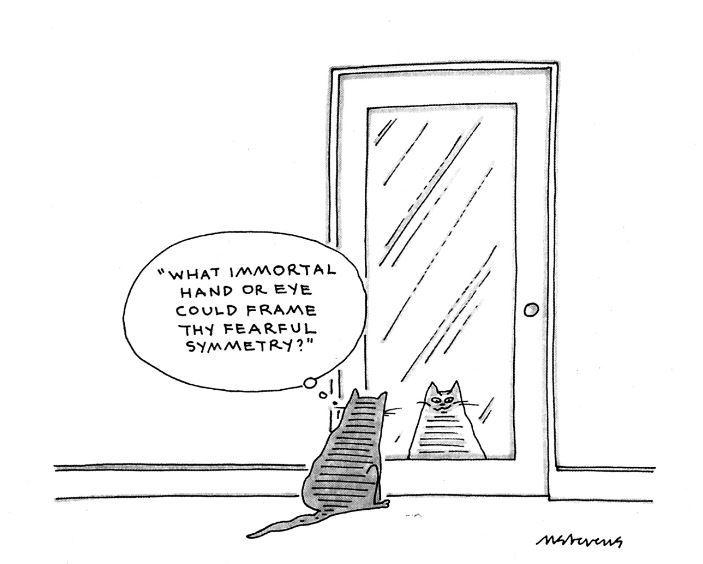
One of the weaknesses of literature is that to understand a piece of literature totally you have to be immersed in the culture from which the literature came. If you aren't immersed in the culture you miss the subtleties.
I came across two examples in the last several days.
Last week I finished reading The Great Gatsby by F. Scott Fitzgerald. In chapter 5, somebody in Gatsby's mansion is playing a piano and singing "Ain't We Got Fun":
There is nothing surer
The rich get rich and the poor get children
In 150 years only scholars of American literature and popular culture will know that the real words were "the rich get rich and the poor get poorer".
Daylight Savings Time (שעון קיץ) started Friday so yesterday (שבת) I resumed my Daylight Savings Time Shabbat Afternoon reading of T'mol Shilshom by S. Y. Agnon. Book 4 chapter 1 has:
בבליים אומרים שלא לשמוח, חלביים אומרים לשמוח. עירקים אומרים שלא לשמוח, תימנים אומרים לשמוח. מערביים אומרים שלא לשמוח, גורגים אומרים לשמוח. בוכרים ופרסיים לא נחלקו. פירשו הפרסיים מן הבוכרים, פרסיים אומרים שלא לשמוח, בוכרים אומרים לשמוח. אלו ואלו לא נחלקו שיש לעשות תשובה.
Anyone immersed in ancient Jewish texts immediately recognizes this as a parody of Mishnah Hagigah 2:2:
יוסף בן יועזר אומר שלא לסמוך, יוסף בן יוחנן אומר לסמוך; יהושוע בן פרחיה אומר שלא לסמוך, ניתאי הארבלי אומר לסמוך; יהודה בן טבאי אומר שלא לסמוך, שמעון בן שטח אומר לסמוך; שמעיה אומר לסמוך, אבטליון אומר שלא לסמוך. הלל ומנחם לא נחלקו; יצא מנחם, ונכנס שמאי. הלל אומר לסמוך, שמאי אומר שלא לסמוך. הראשונים היו נשיאים, והשניים אבות בית דין.
BTW this is the funniest chapter so far in the book. The parody of the Mishnah adds to the humor.
Added 18/10/20: these two New Yorker cartoons also illustrate the point:

Sunday, October 26, 2014
The Rabbinate of the Observer
The following was Yitzchok Adlerstein's critique, at the Cross Currents Web site, of Baruch Brody's prescription in Hakira volume 17 for demarcating Modern Orthodox Judaism (presumably vs. Haredi Judaism).
I didn't read Brody's original article. For all I know, Adlerstein may have been deliberately misconstruing Brody's argument in order to set up a straw man to knock down. It doesn't matter, because I want to address Adlerstein's straw man.
Brody sets out to help us understand. Armed with serious credentials in philosophy as well as medicine, he offers a bold, new definition that is simple, and elegant, and stands up to the criticism to which he subjects it. The Modern Orthodox Jew, says Dr. Brody, is one who also accepts pro tanto the values and teachings of modernity. (He immediately addresses the concerns of those of us who are Latin-challenged, by telling us in a footnote that a pro tanto belief is one that may be overridden by other stronger considerations. This is a crucial point for Brody, as he is certainly not willing to allow the values of modernity to trump clear halacha, and similarly uneasy when those values collide with other forms of traditional thinking. He spends considerable space in the essay offering different strategies of dealing with such conflicts.)
Dr. Brody then takes us on a tour of Western thought since the Renaissance, and culls twelve values that he takes as achievements of modernity that MO should embrace. Briefly, they are: 1) the value of human worth and dignity, and of human individuality; 2) the value of beauty for its own sake; 3) the value of individual conscience in interpreting G-d’s law; 4) the value of toleration (? respect) of diversity; 5) the value of inquiry even into long-established truths; 6) the tentative acceptance of the results of scientific inquiry as true; 7) the value of reason; 8) the belief in cumulative human progress; 9) the rule of law, derived from the consent of the governed that binds all citizens equally; 10) the principle of fundamental human rights held equally by all; 11) the values of liberty, equality and fraternity; 12) the importance of nationality.
Brody fleshes out each of these values, and why MO should look kindly upon each one. I could imagine that this list might some day become the Brody Test of progressive thinking, scoring people on a scale of zero to twelve. (I find some truth in most of the values, while emphatically rejecting only one. Dr. Brody amplifies item #3 with these words: “Modern Orthodox Jews should consult sacred texts to find answers to their questions. To the extent that they feel the need, they should consult the experts on the texts….The common strategy of adopting a single expert authority as one’s authority and following their views in all cases seems to me to be an abdication of individual responsibility.” To me it seems that failure to recognize the need to submit to those who are greater talmidei chachamim runs afoul of many passages in Shas and poskim.)Adlerstein has in fact identified exactly what is, or ought to be, the difference between Modern Orthodoxy and Haredism. It is similar to one of the differences between Roman Catholicism and Protestantism. In Roman Catholicism the priests are intermediaries between ordinary Christians and God. Protestantism believes in the "priesthood of all believers". This is how the Wikipedia article on "Universal Priesthood" defines it:
Protestants believe that through Christ they have been given direct access to God, just like a priest; thus the doctrine is called the priesthood of all believers. God is equally accessible to all the faithful, and every Christian has equal potential to minister for God. This doctrine stands in opposition to the concept of a spiritual aristocracy or hierarchy within Christianity.Similarly, Modern Orthodoxy is based, or should be based, on "the Rabbinate of the observers".
I didn't read Brody's original article. For all I know, Adlerstein may have been deliberately misconstruing Brody's argument in order to set up a straw man to knock down. It doesn't matter, because I want to address Adlerstein's straw man.
Sunday, September 21, 2014
The Mishnah in Daf Yomi Hagigah 11b Reminded Me of an Annoying Translation of RaSHI on the Humash
The Mishnah says "אין דורשין בעריות בשלשה", presumably to be extra careful that the students get the law right. That reminded me of some very annoyingly prudish translations of רש"י on Vayikra chapter 20 (Chumash with Targum Onkelos, Haphtaroth and Rashi's Commentary translated into English and annotated by Rabbi A. M. Silberman in collaboration with Rev. M. Rosenbaum, pubished by the Silberman Family 5745 ISBN 0-87 306-019-9, copyright 1934 by Dr. A. M. Silberman). On verse 13 RaSHI says
משכבי אשה: מכניס כמחכול בשפופרת
which Silberman translates as "in the manner of marital intercourse". What would be prurient about "inserts like an eyeliner into a tube"? On verse 18, incipit "הערה". RaSHI says
יש אומרים זו נשיקת שמש, ויש אומרים זו הכנסת עטרה
which Silberman translates as "Some say that it implies a superficial embrace, others a closer intimacy". What would be prurient about "genital contact" vs. "genital penetration"? Contrary to the Mishnah, Silberman could lead people whose first introduction to הלכות ערווה is via his translation to feel guilty about things that they need not feel guilty about and vice versa.
משכבי אשה: מכניס כמחכול בשפופרת
which Silberman translates as "in the manner of marital intercourse". What would be prurient about "inserts like an eyeliner into a tube"? On verse 18, incipit "הערה". RaSHI says
יש אומרים זו נשיקת שמש, ויש אומרים זו הכנסת עטרה
which Silberman translates as "Some say that it implies a superficial embrace, others a closer intimacy". What would be prurient about "genital contact" vs. "genital penetration"? Contrary to the Mishnah, Silberman could lead people whose first introduction to הלכות ערווה is via his translation to feel guilty about things that they need not feel guilty about and vice versa.
Wednesday, August 6, 2014
Battles that the Romans lost on their way to the top
In 502 BCE the Romans lost the Battle of Pometia
In 482 BCE the Romans lost the Battle of Antium
In 477 BCE the Romans lost the Battle of the Cremera
In 390 BCE the Romans lost the Battle of Allia River
In 321 BCE the Romans lost the Battle of the Caudine Forks
In 316 BCE the Romans lost the Battle of Lautulae
In 298 BCE the Romans lost the Battle of Camerinum
In 285 BCE the Romans lost the Battle of Arretium
In 280 BCE the Romans lost the Battle of Heraclea
In 279 BCE the Romans lost the Battle of Asculum
In 260 BCE the Romans lost the Battle of the Lipari Islands
In 253 BCE the Romans lost the Battle of Tunis
In 250 BCE the Romans lost the Siege of Lilybaeum
In 249 BCE the Romans lost the Battle of Drepana
In 225 BCE the Romans lost the Battle of Faesulae
In 218 BCE the Romans lost the Battle of the Ticinus and the Battle of the Trebia
In 217 BCE the Romans lost the Battle of Lake Trasimine
In 216 BCE the Romans lost the Battle of Canae
In 212 BCE the Romans lost the First Battle of Capua, the Battle of Silaris and the Battle of Herdonia
In 211 BCE the Romans lost the Battle of the Upper Baetis
In 210 BCE the Romans lost the Battle of Herdonia and the Battle of Numistro
In 209 BCE the Romans lost the Battle of Asculum
In 171 BCE the Romans lost the Battle of Callicinus
In 147 BCE the Romans lost the Battle of the Port of Carthage
In 112 BCE the Romans lost the Battle of Noreia
In 109 BCE the Romans lost the Battle of the Rhone River
In 107 BCE the Romans lost the Battle of Burdigala
In 105 BCE the Romans lost the Battle of Arausio
In 89 BCE the Romans lost the Battle of Fucine Lake
In 73 BCE the Romans lost the Battle of Mount Vesuvius
In 72 BCE the Romans lost the Battle of Picenum and the Battle of Mutina I
In 71 BCE the Romans lost the Battle of Campania
In 53 BCE the Romans lost the Battle of Carrhae
In 16 BCE the Romans lost the Battle of Clades Lolliana
In 9 CE the Romans lost the Battle of the Teutonberg Forest
In 60 CE the Romans lost the Battle of Camulodunum
In 62 CE the Romans lost the Battle of Rhandeia
In 66 CE the Romans lost the Battle of Beth Horon
In 87 CE the Romans lost the First Battle of Tapae
In 114 CE the Roman Empire reached its maximum extent.
In 482 BCE the Romans lost the Battle of Antium
In 477 BCE the Romans lost the Battle of the Cremera
In 390 BCE the Romans lost the Battle of Allia River
In 321 BCE the Romans lost the Battle of the Caudine Forks
In 316 BCE the Romans lost the Battle of Lautulae
In 298 BCE the Romans lost the Battle of Camerinum
In 285 BCE the Romans lost the Battle of Arretium
In 280 BCE the Romans lost the Battle of Heraclea
In 279 BCE the Romans lost the Battle of Asculum
In 260 BCE the Romans lost the Battle of the Lipari Islands
In 253 BCE the Romans lost the Battle of Tunis
In 250 BCE the Romans lost the Siege of Lilybaeum
In 249 BCE the Romans lost the Battle of Drepana
In 225 BCE the Romans lost the Battle of Faesulae
In 218 BCE the Romans lost the Battle of the Ticinus and the Battle of the Trebia
In 217 BCE the Romans lost the Battle of Lake Trasimine
In 216 BCE the Romans lost the Battle of Canae
In 212 BCE the Romans lost the First Battle of Capua, the Battle of Silaris and the Battle of Herdonia
In 211 BCE the Romans lost the Battle of the Upper Baetis
In 210 BCE the Romans lost the Battle of Herdonia and the Battle of Numistro
In 209 BCE the Romans lost the Battle of Asculum
In 171 BCE the Romans lost the Battle of Callicinus
In 147 BCE the Romans lost the Battle of the Port of Carthage
In 112 BCE the Romans lost the Battle of Noreia
In 109 BCE the Romans lost the Battle of the Rhone River
In 107 BCE the Romans lost the Battle of Burdigala
In 105 BCE the Romans lost the Battle of Arausio
In 89 BCE the Romans lost the Battle of Fucine Lake
In 73 BCE the Romans lost the Battle of Mount Vesuvius
In 72 BCE the Romans lost the Battle of Picenum and the Battle of Mutina I
In 71 BCE the Romans lost the Battle of Campania
In 53 BCE the Romans lost the Battle of Carrhae
In 16 BCE the Romans lost the Battle of Clades Lolliana
In 9 CE the Romans lost the Battle of the Teutonberg Forest
In 60 CE the Romans lost the Battle of Camulodunum
In 62 CE the Romans lost the Battle of Rhandeia
In 66 CE the Romans lost the Battle of Beth Horon
In 87 CE the Romans lost the First Battle of Tapae
In 114 CE the Roman Empire reached its maximum extent.
Subscribe to:
Posts (Atom)